Some landscapes ask me to slow down almost immediately. Burned forests are like that.
Walking through areas of Washington shaped by wildfire, I find myself looking at what remains. Blackened trunks rise from open hillsides. Dead trees turn silver with weather. Young plants begin filling spaces that were once shaded by forest.
There is loss here. But there is also change.
As a black-and-white landscape photographer, I am drawn to that tension. Fire simplifies a landscape visually. It exposes lines, shapes, textures, and relationships that may have been hidden before. At the same time, the land is already moving toward whatever comes next.

What Draws Me to Burned Landscapes
I have photographed several fire-altered landscapes in central Washington, including the Entiat River Valley and Naneum Ridge.
These are not places I visit because I am looking for destruction.
What interests me is how a landscape changes after disturbance and how those changes become visible over time.
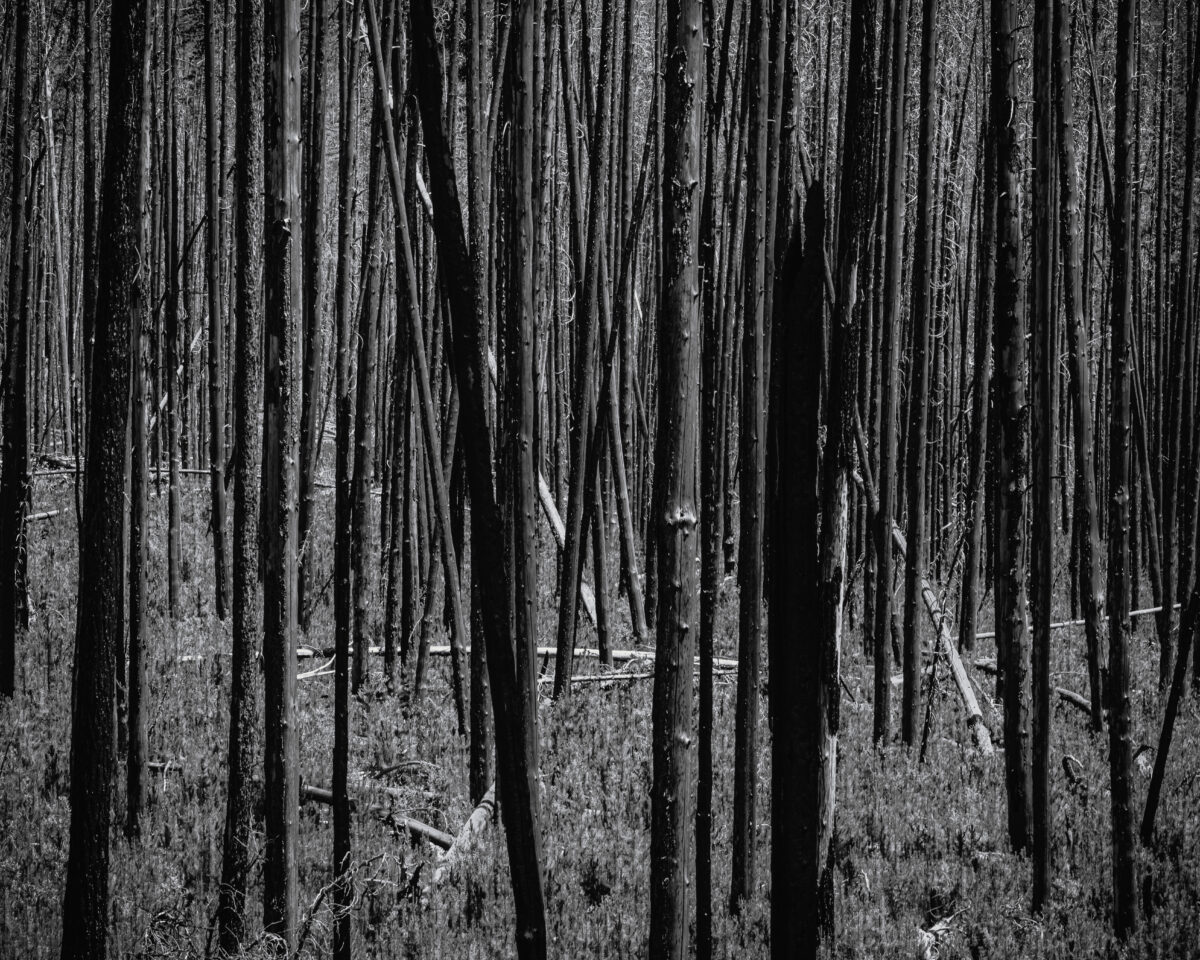
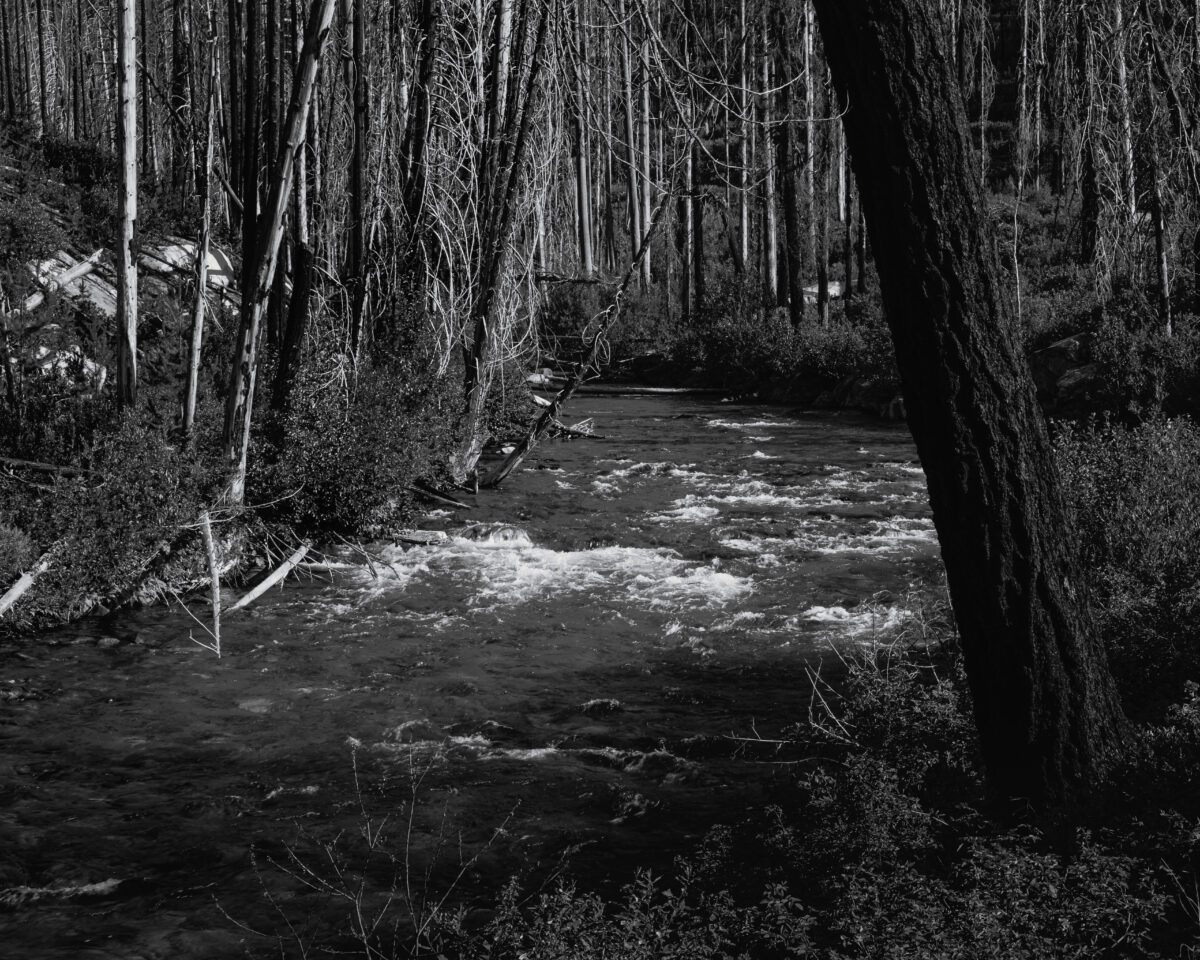
A dense forest may become an open hillside filled with upright trunks. Fallen trees create patterns across the ground. Grasses and shrubs emerge between remnants of the previous forest. Rivers continue moving through valleys regardless of what happened on the slopes above them.
The landscape becomes a record of what happened, but it is not frozen at that moment.

Seeing Fire Through Black and White
Black-and-white photography changes the way I respond to these places.
Without color competing for attention, I can concentrate on structure.
A burned tree may become a dark vertical line against pale grass. Weathered wood can glow against a shadowed hillside. Repeating trunks create rhythm. Empty spaces become just as important as the trees themselves.
That simplification is one reason I continue working in black and white.
I am not trying to make the landscape look exactly as someone would have seen it standing beside me. I am interested in what the scene felt like and what caught my attention.
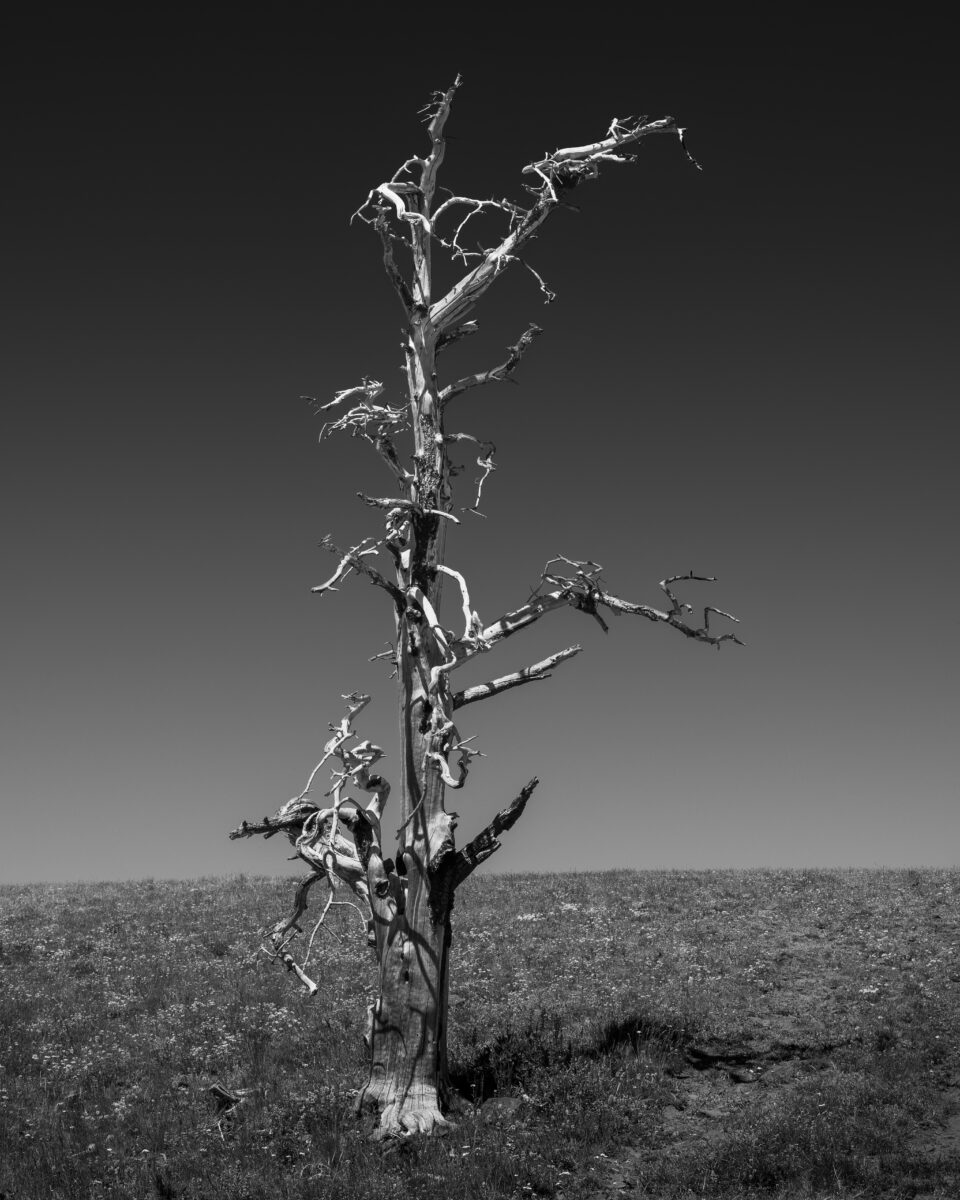
Sometimes that comes down to one tree.
During one outing, I stopped to photograph a lone, fire-scarred tree surrounded by a much more open landscape. The tree held my attention because it seemed to contain much of what I had been noticing elsewhere. It was damaged and weathered, yet it still stood within a landscape that continued changing around it.
That became the photograph.
Fire Has Long Been Part of These Landscapes
Wildfire is easy to think of only as a destructive force. The ecological story is more complicated.
Fire has shaped many western forests for thousands of years. How often it occurred and how intensely it burned varied by forest type, elevation, climate, terrain, and other conditions.
People were also part of that history.
Indigenous communities throughout the Pacific West have long used fire to care for landscapes. Cultural burning has supported food plants, wildlife habitat, travel, gathering areas, and other ecological and cultural needs. Modern research increasingly recognizes that Indigenous fire stewardship helped shape many landscapes long before federal and state agencies began using prescribed fire.
Colonization and government policies restricted Indigenous burning, while land-management agencies increasingly emphasized fire suppression. In many dry forests, decades of fire exclusion contributed to denser stands and greater fuel buildup.
Today the picture is complicated further by a warming climate, human development, land management, and human-caused ignitions.
Research across western U.S. forests shows that the amount of land burned has increased in recent decades, including the area burned at high severity. Warmer and drier fire seasons are one important part of that change. At the same time, recent research found that the total number of recorded western wildfires actually declined between the periods 1992–2006 and 2007–2020 while the area burned increased. In other words, simply saying that there are “more fires” misses part of the story.
Watching a Landscape Change
One of the things I appreciate about returning to fire-altered country is that change after fire does not happen in a straight line.
Some plants return quickly. Trees may take decades to establish again. In some places, the forest that eventually develops may look very different from what existed before the fire.
Even the dead trees continue changing.
Bark falls away. Wood becomes bleached by weather. Some trunks remain standing for years while others eventually fall. New vegetation gradually changes the visual balance of the landscape.
For a photographer, that means the same place never really stays the same.
It also means I do not have to photograph everything during one visit.
I can walk, pay attention, make a few photographs, and return later to see what has changed.
That slower approach fits the way I prefer to work. I would rather explore a landscape and respond to what I find than arrive with a checklist of photographs I expect to make.
Finding Beauty Without Ignoring What Happened
There is an uncomfortable question when photographing burned landscapes.
Can something shaped by destruction also be beautiful?
I think it can.
Beauty does not erase what happened.
A photograph of burned trees can hold several ideas at once. There can be loss, severity, quiet, pattern, regeneration, and beauty within the same frame.
That complexity is part of what keeps drawing me back.
When I photograph these places, I am not trying to turn wildfire into a simple story about destruction or recovery. I am trying to pay attention to what is actually there.
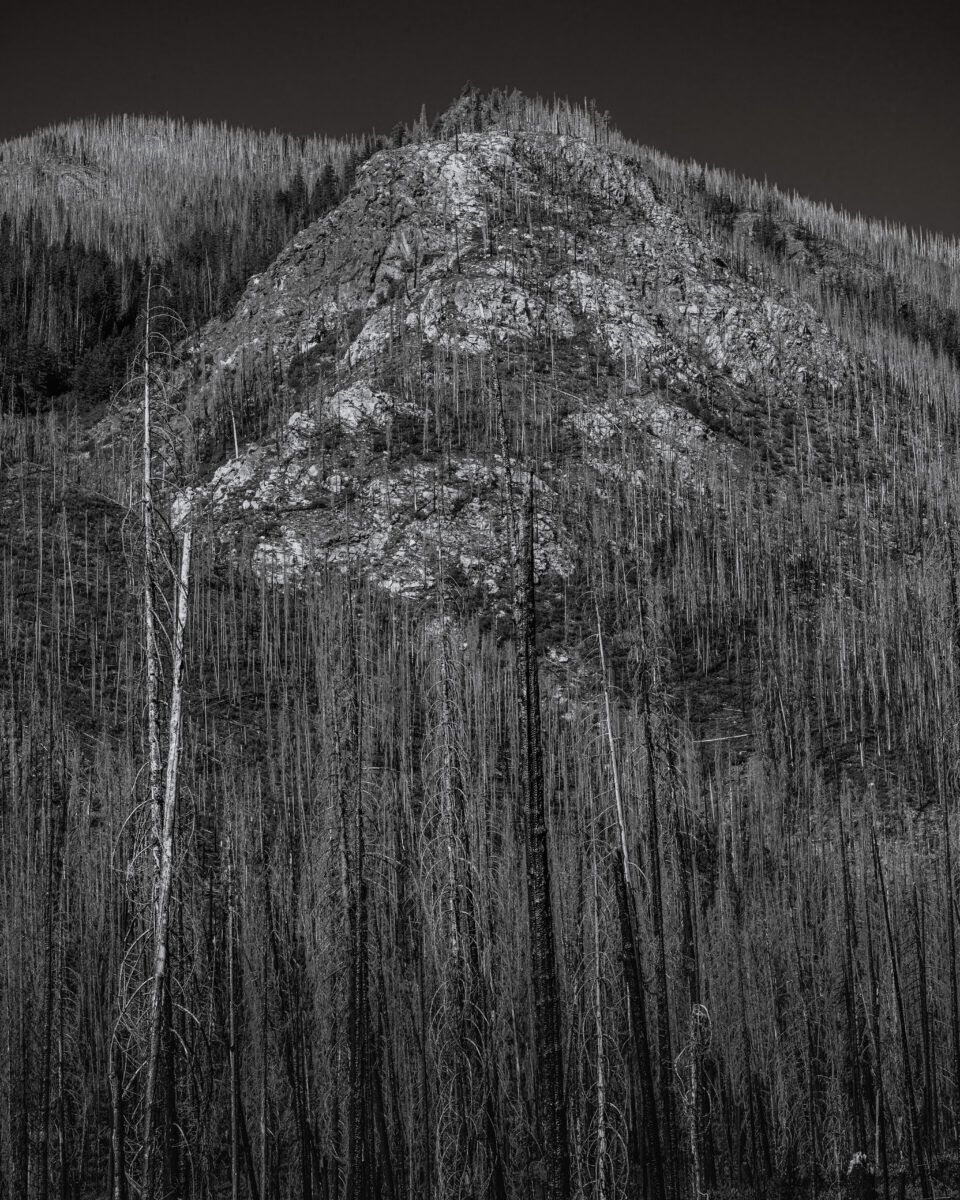
Sometimes that is a hillside filled with blackened trunks.
Sometimes it is new vegetation growing beneath them.
Sometimes it is simply the quiet geometry left behind after fire has moved through.
What These Landscapes Leave With Me
Photographing burned forests has changed the way I think about landscapes.
We often imagine nature as something stable. We become familiar with a forest, river, or mountain and begin to think of that version of the place as permanent.
It isn’t.
Fire makes that especially clear.
Landscapes are always changing, although much of that change usually happens too slowly for us to notice. Fire compresses part of that process into a period we can see.
The photographs become a way for me to spend more time with that idea.
They also remind me why I value these places beyond photography. Responsible fire use, careful recreation, thoughtful land management, and continued learning from Indigenous knowledge all matter as we live with fire in the West.
But when I am standing in a burned landscape with my camera, my first job is simpler.
Look carefully.
Notice what has changed.
And make a photograph when something makes me stop.
Further Explorations
If you would like to continue exploring how wildfire and changing landscapes have influenced my photography, you may also enjoy:
Blackened Trees, a Black and White Photo Project
My photographic study of fire-scarred trees and the visual patterns left behind after wildfire.
Box Canyon, Entiat River, Washington
A closer look at another landscape along the Entiat River and my experience photographing this part of central Washington.
Exploring Eastern Washington Landscapes in Black and White
More photographs and reflections from the drier landscapes east of the Cascade Range.


