
Introduction – Why This Connection Matters
One winter morning deep in the Olympic Peninsula, I stopped beside a moss-draped cedar. A creek rushed somewhere out of sight. The air carried the scent of rain-soaked bark, and light shifted slowly over stones as if time had paused. In that moment, the noise of daily life—emails, errands, deadlines—slipped away.
Many of us have felt this before. A quiet pause in nature can reset our minds. Science now explains why. Even short moments outdoors—or looking at nature through art—can help us think more clearly, feel calmer, and recover from stress.
In this article, we’ll explore how our surroundings influence attention, mood, and health. You’ll see why natural environments—and art inspired by them—can restore focus, reduce anxiety, and boost well-being. The best part? These benefits are not out of reach, and we’ll also look at how you can bring them into your own home or workspace, empowering you to take control of your well-being.

Why Environment Shapes Us
The spaces we spend time in shape how we think and feel. City streets keep our minds on high alert, scanning for cars, people, and signals. Natural settings engage our senses differently—offering sights and sounds that invite our attention without demanding it.
Researchers refer to this as a state of soft fascination—a relaxed attention that occurs in the presence of certain natural stimuli. Gentle movements, flowing water, or the rhythmic crash of waves hold our focus just enough to let our mental resources recover. Even indoors, when we see art that reflects the natural world, similar processes can occur.
The Science of Attention Restoration
Psychologists Stephen and Rachel Kaplan described this in their Attention Restoration Theory (ART). Our “directed attention” works like a muscle—after heavy use, it needs rest. Nature provides that rest by holding our attention in a calm, effortless way.
In a Berman et al. (2008) study, participants walked for 50 minutes in either a green park or a busy urban area. The park group improved their memory and attention scores by nearly 20%. The city walkers showed no improvement. This study, along with numerous others, provides compelling evidence for the cognitive benefits of nature exposure.
A systematic review found that even photographs of nature can help restore focus. When in-person exposure isn’t possible, art can still give the mind that gentle reset.
Field Story – Stillness on the Hamma Hamma River

One crisp morning along the Upper Hamma Hamma River, frost edged the rocks and the air smelled faintly of cedar. The river moved in a steady, unhurried rhythm. I set up my tripod and waited for the light to touch a particular rock face. For that hour, my thoughts stayed anchored in the moment. No lists. No distractions. Just the sound of water and the slow shift of shadow to light.
That kind of presence is precisely what the research describes—a state where the mind recovers simply by being there.
Nature and Stress Reduction
Nature not only restores focus. It also calms the body.
In a Tyrväinen et al. (2014) study, participants spent 15 minutes in different environments: a busy street, a park, and a forest. In the park and forest, heart rate variability increased, and cortisol (a stress hormone) dropped. On the street, stress markers remained unchanged.
Longer-term studies also show impact. In a landmark neuroimaging study, Lederbogen et al. (2011) found that people who grew up in greener, less urban environments showed healthier amygdala activity—associated with better emotional regulation—compared to those from more urban backgrounds.
Even indoors, nature images and sounds can lower blood pressure and slow breathing. That’s why hospitals, counseling centers, and wellness clinics often use scenic art and biophilic design.

Breaking the Cycle of Rumination
Rumination—replaying worries and negative thoughts—keeps the mind stuck. But nature, as we’ll see, has the power to help break that loop, offering a hopeful path to improved mental health.
In a Stanford study, participants walked for 90 minutes either in a natural setting or along a busy road. Those in nature reported less rumination and showed reduced brain activity in areas linked to self-focused worry.
A review by McMahan & Estes (2015) confirmed that mood improves after exposure to nature, across different age groups and settings.

Why Patterns in Nature Work (and Why Art Can, Too)
Many natural forms follow fractals—shapes that repeat at different scales. Think of branching rivers, fern leaves, or the curves of a coastline. These patterns are rich but orderly, and our brains respond well to them.
Research by Taylor et al. (2011) found that viewing mid-range fractals affects the observer’s physiological condition.
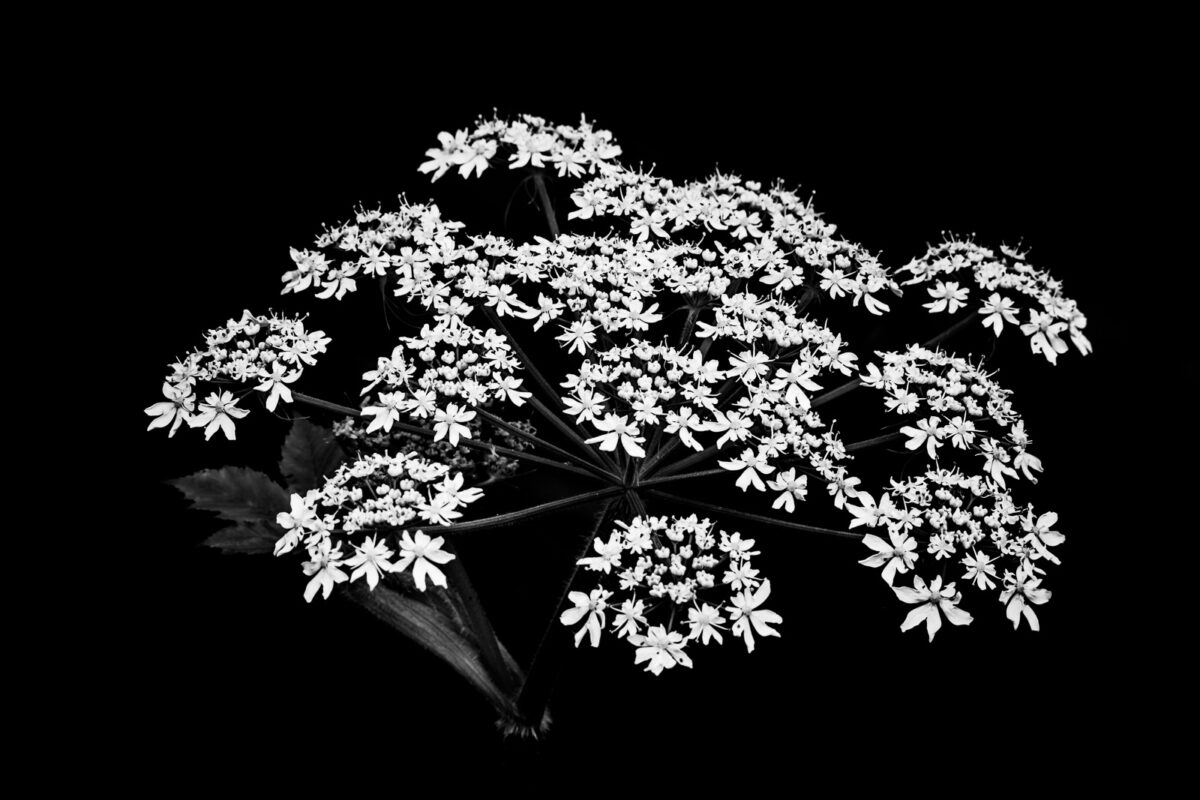
Black-and-white photography can enhance this effect. Without color, our eyes trace the shapes, shadows, and light more intently.
Field Story – Afternoon at Mt. St. Helens
After a week of exploring the varied landscapes of central Washington, I found myself back in the South Cascades. Low clouds clung to the ridges as I approached Mount St. Helens, hiding most of its profile. I waited, watching the light shift and the mist slowly lift.
When the skies finally cleared, the mountain emerged in full view—its ridges sharp, its slopes etched with the story of past eruptions. I hiked to a higher vantage point for a clear, unobstructed perspective. From there, the scene felt almost weightless, the kind of quiet that makes your shoulders drop without you realizing it.

Moments like this reduce more than stress. They open space in the mind.
Short Moments Still Count
Benefits don’t require hours outside. In Lee et al. (2015), just 40 seconds of looking at a green roof before a concentration task improved performance and reduced mistakes. Even brief exposure to nature can have a measurable effect, making it easy to integrate into daily life.
The takeaway: place nature-inspired art where your eyes naturally land—above a desk, along a hallway, or near your favorite chair. Small, intentional choices like these can create a more restorative environment. Pairing images with nature sounds or scents can further enhance the effect.

Everyday Micro-Restorations for Different Lifestyles
For Office Workers
- Glance at a framed print during breaks.
- Use a rotating nature image as your desktop background.
- Keep a small plant or natural object nearby.
For Creatives
- Pause between projects to study a favorite image.
- Pair art with a short walk to spark ideas.
- Change images seasonally for fresh inspiration.
For Retirees
- Place art in the rooms you use most.
- Create a morning ritual of looking at the image for a few minutes.
- Rotate art to reflect the seasons.

Cultural and Historical Perspectives
Long before modern research, cultures understood nature’s role in mental clarity.
In the Pacific Northwest, Indigenous nations view mountains, rivers, and forests as living relatives. Cedar is used for shelter, medicine, and spiritual cleansing. Seasonal salmon runs provide food and a grounding rhythm to life.
In Japan, shinrin-yoku (“forest bathing”) is a practice of strolling through woods, engaging all senses. Ancient Greek philosophers would walk in gardens before engaging in debate. Islamic gardens use symmetry and water to inspire contemplation. Nordic traditions value forest time for renewal during long winters.

Designing Restorative Spaces with Art
- Placement: Put art where your gaze naturally rests—above desks, across from seating, or in wellness spaces.
- Lighting: Use soft daylight when possible; warm evening light makes art more inviting.
- Scale: Large works create an immersive feel. Grouping smaller pieces can tell a visual story.
- Framing: Natural wood or simple frames keep the focus on the image.
Real-World Applications
- Homes – Nature photography can anchor a space and serve as a mental refuge.
- Workplaces – Even one large-scale nature image in a shared space can offer a visual pause.
- Healthcare – Hospitals and clinics use scenic art to reduce anxiety and improve recovery times.
- Wellness Spaces – Studios and therapy offices often display calming landscapes to help focus and ground.

Practical Ways to Bring Nature to Mind
- Place art in high-traffic spots.
- Combine images with nature sounds or subtle scents.
- Rotate art with the seasons.
- Choose large-scale for immersion.
- Create gallery walls with connected scenes.
- Feature local landscapes for personal connection.
Future Directions
Nature prescriptions, corporate wellness programs, and biophilic design are expanding. Virtual and augmented reality are being tested for delivering nature experiences indoors, but authentic photography still holds unique emotional weight.
Commonly Asked Questions
A: Yes. Research shows that the restorative effects of nature images depend more on composition, patterns, and depth than on color alone. Black-and-white photography can highlight textures, shapes, and light in a way that draws the viewer’s focus, enhancing the calming effect. You can explore examples in my black-and-white landscape collections.
A: Benefits can appear surprisingly quickly. Studies have shown that mood can improve within minutes of nature exposure, and attention can improve after as little as 40 seconds of looking at a natural scene. My blog post on The Art of Creating Sanctuary shares practical ways to bring these moments into your daily life.
A: Larger pieces can be more immersive, creating a greater sense of “being there.” However, smaller prints in well-chosen locations—such as beside a reading chair or in a hallway—can still have a meaningful impact. Placement and visibility matter as much as size. For inspiration, see my post on Why Large-Scale Art Works So Well—And How to Use It.
A: Any space where people need focus, relaxation, or a sense of grounding—such as living rooms, home offices, waiting rooms, therapy spaces, and corporate lounges—can benefit from nature imagery. You can browse my Bringing Nature Indoors post for examples and ideas.
A: While nothing fully replaces real-world nature experiences, art can provide many of the same mental benefits when outdoor time is limited. It’s especially valuable for those in urban settings or with mobility limitations. My Pacific Northwest landscape photography bring the outdoors in through timeless photography.
A: Mid-complexity fractals—such as those found in branching rivers, fern leaves, and coastal rock formations—are shown to produce the strongest calming effects. Photography that emphasizes these patterns can be particularly effective, like my Rialto Beach series.
A: Pairing art with nature sounds, plants, natural materials, or soft lighting can enhance the restorative effect. Even subtle combinations—like placing a framed photograph near a window—can make a difference. For more styling ideas, visit my Mindfulness Décor Tips.
A: Yes. Hospitals, clinics, and corporate offices have increasingly incorporated nature imagery into their spaces, with research showing improvements in patient recovery times, reduced stress, and higher workplace satisfaction. My Corporate & Trade Art Solutions page outlines how I work with organizations to create restorative environments.

Closing Reflection
When I create a black-and-white photograph of the Pacific Northwest, I’m after more than a scene. I’m distilling a feeling—one of space, calm, and quiet attention.
Science supports what we feel instinctively: nature, whether outside or through art, can restore the mind and body. The right image can be part of your daily well-being.
If you’d like to explore art that brings that sense of calm into your own space, you can browse my collections.
Further Explorations:
Unlocking Your Flow State: The Secret to Effortless Focus and Creativity
Can Art be a Form of Self-Improvement?
Why Black and White Photography Captures the Soul of the Ocean


